
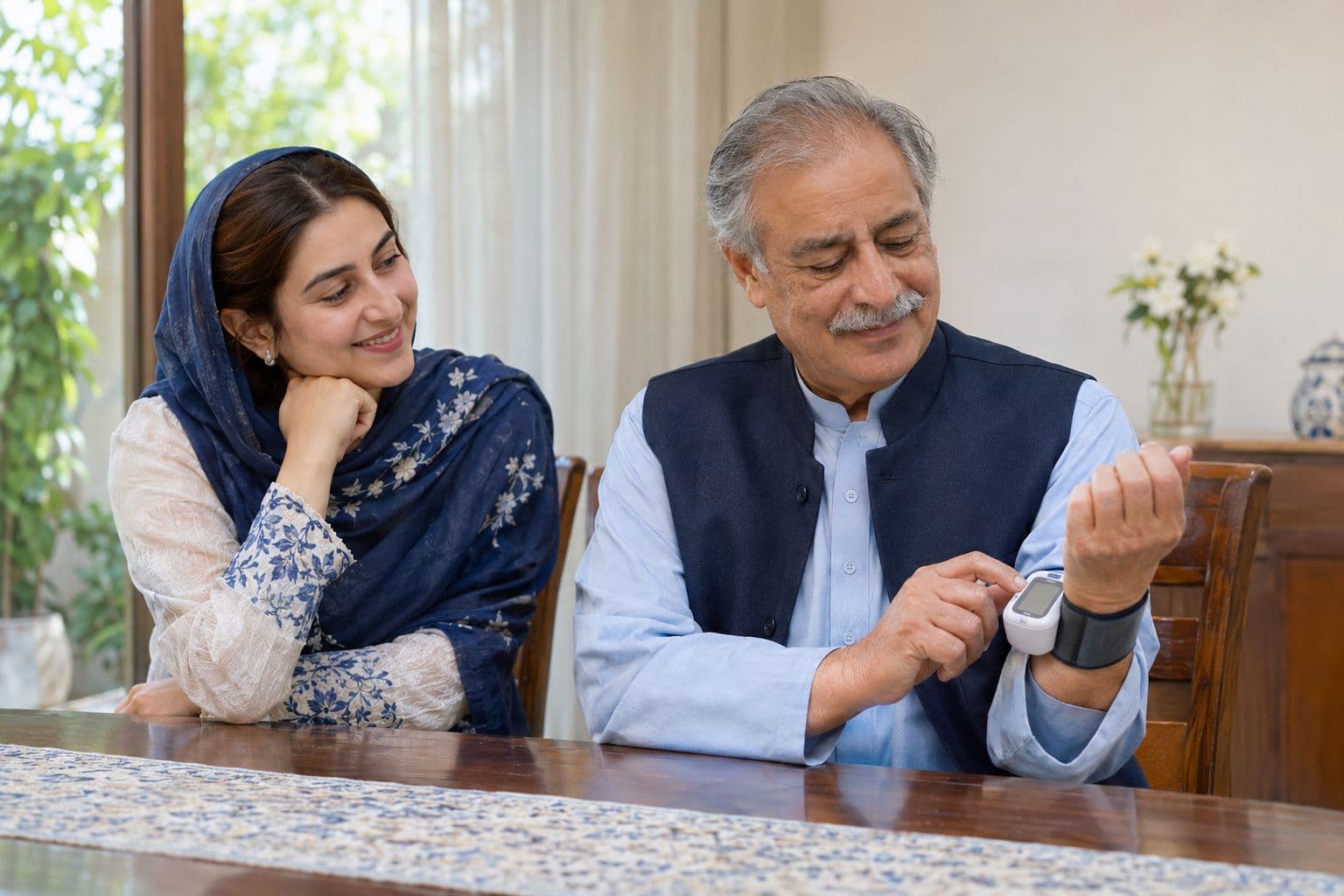
High blood pressure often has no symptoms at all, yet it increases the risk of heart attack, stroke and kidney disease. The only way to know your blood pressure is to measure it.
Checking at home
- Sit quietly for five minutes before measuring.
- Keep your arm supported at heart level.
- Take two readings a minute apart and note both.
- Measure at similar times each day for a week before your consultation.
What the numbers mean
If your readings are often 140/90 or higher, you may have high blood pressure. Your doctor will look at your readings along with your overall health. Healthy habits and medicine can bring it under control.
This article gives general facts, not medical advice. Talk to a doctor about your own health. In an emergency, call 1122.
Consult our Heart & Blood Pressure department